
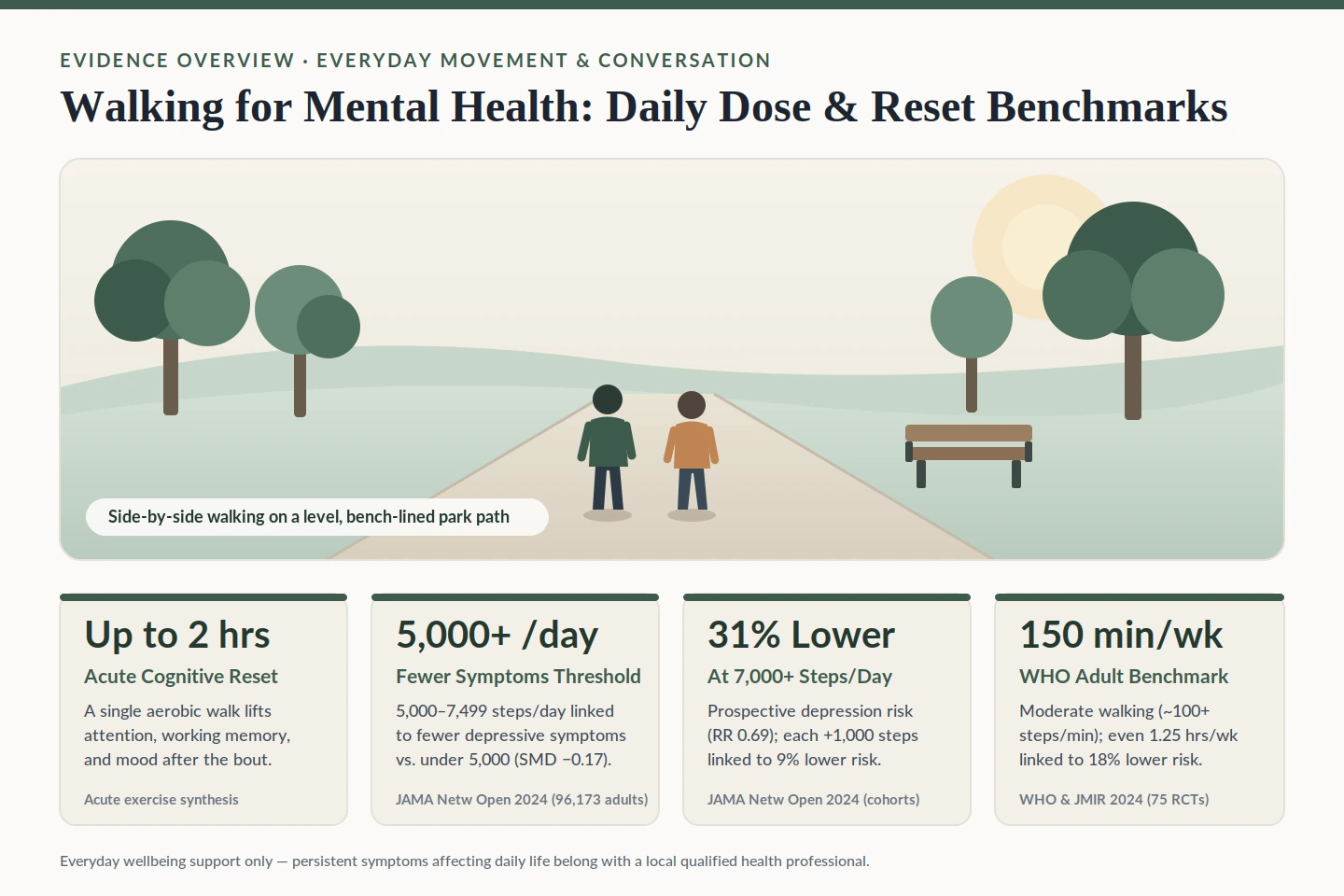
Walking for Mental Health: Daily Routine & Peer Walk Habits
Learn how regular walking supports mental health, starting at 5,000+ daily steps or short brisk bouts, and how side-by-side peer walks ease everyday conversations.
Topic
How to plan an inclusive walk where people can talk, rest, and leave without a special reason.
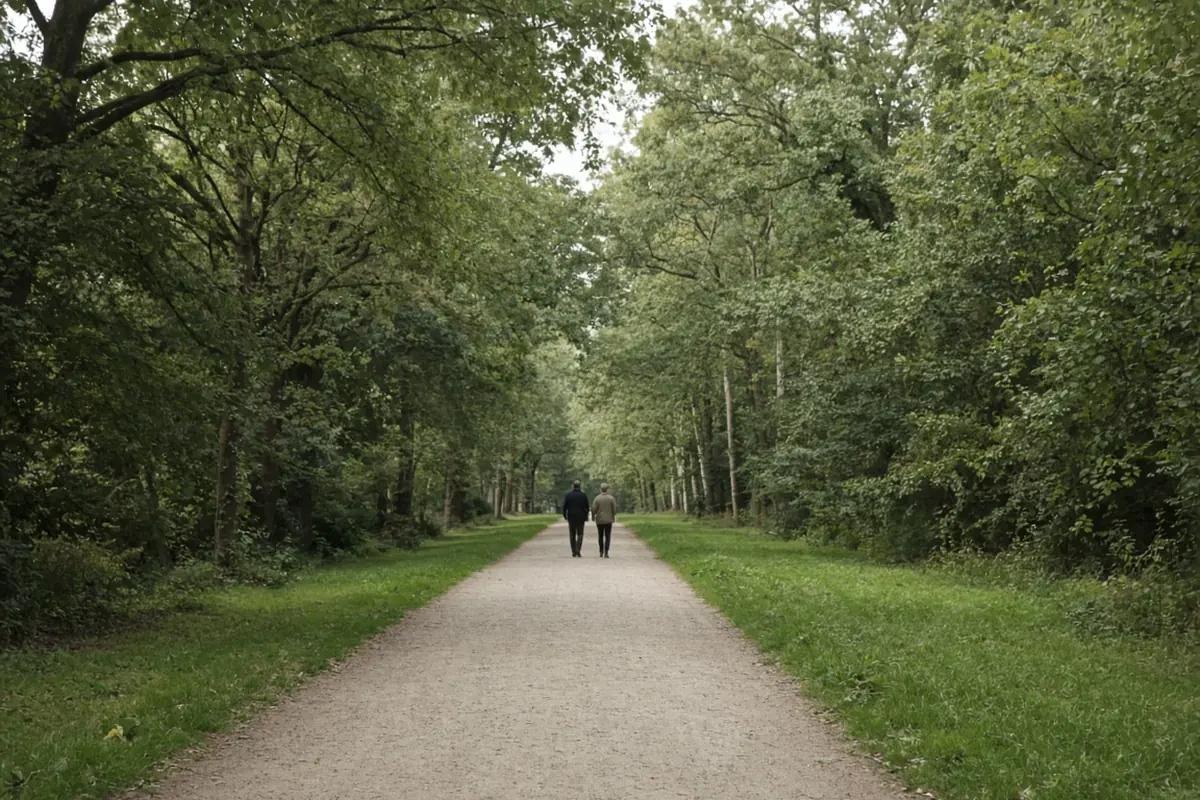
Start with the planning note before you publish a route or invite a group.
How to organise an inclusive walk covers route width, slope, passing space, and planned stops. How to start a walking club covers PROWAG step-free route checks, 3-tier pace cohorts, volunteer sweep ratios, and pocket ICE cards. Walking pace groups and turn-back points covers side-by-side conversation widths, 21-minute time-based turn-back benches, and sweep leader route cards. Walking for mental health: daily routine and peer walk habits covers daily step and cadence benchmarks, stress-relief routines, side-by-side peer conversation etiquette, and non-clinical care boundaries.
Learn how regular walking supports mental health, starting at 5,000+ daily steps or short brisk bouts, and how side-by-side peer walks ease everyday conversations.
Plan conversational walking pace groups with UK DfT 1.5–2.0 m side-by-side path widths, 21-minute time-based turn-back benches, and sweep leader route cards.

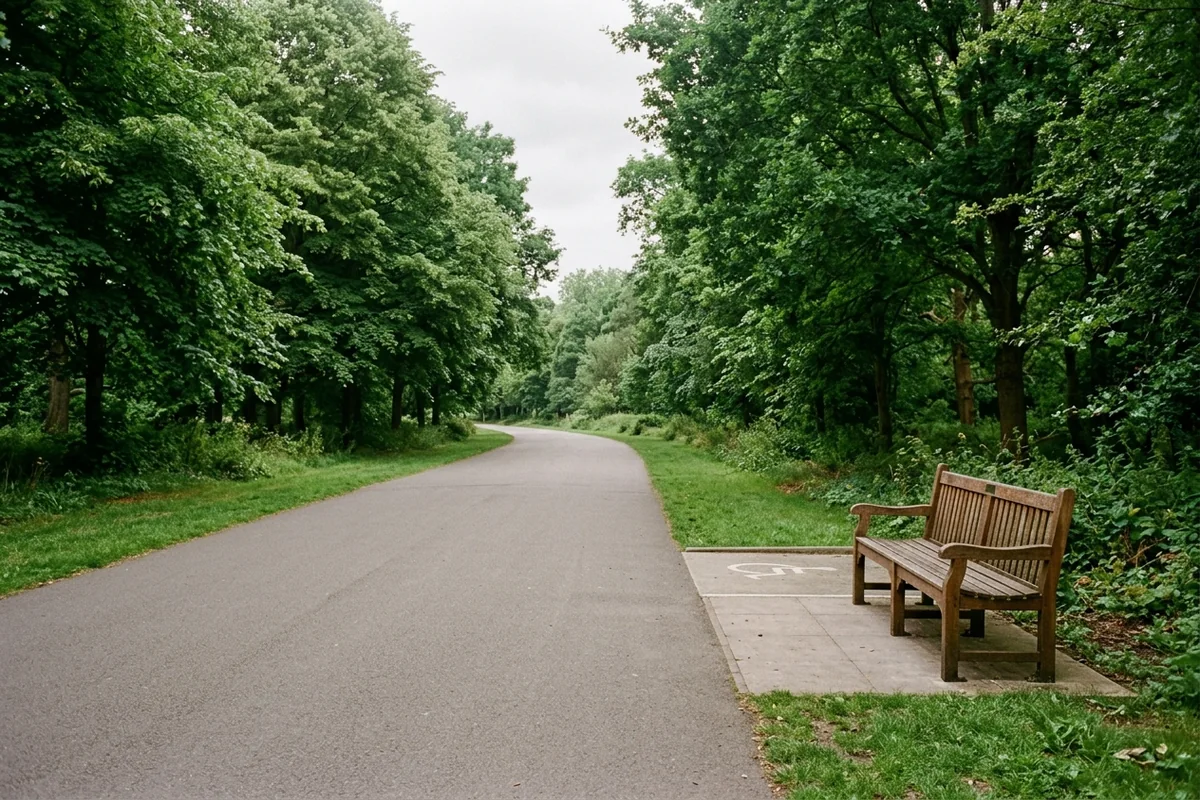
Operational guide on how to start a walking club: PROWAG R302 step-free route checks, 300–500 m bench spacing, 3-tier MET pace cohorts, volunteer back-marker ratios, and pocket ICE cards.
Plan a walk people can join, pause, and leave: route width, slope, passing space, and stops from public accessibility guidance.