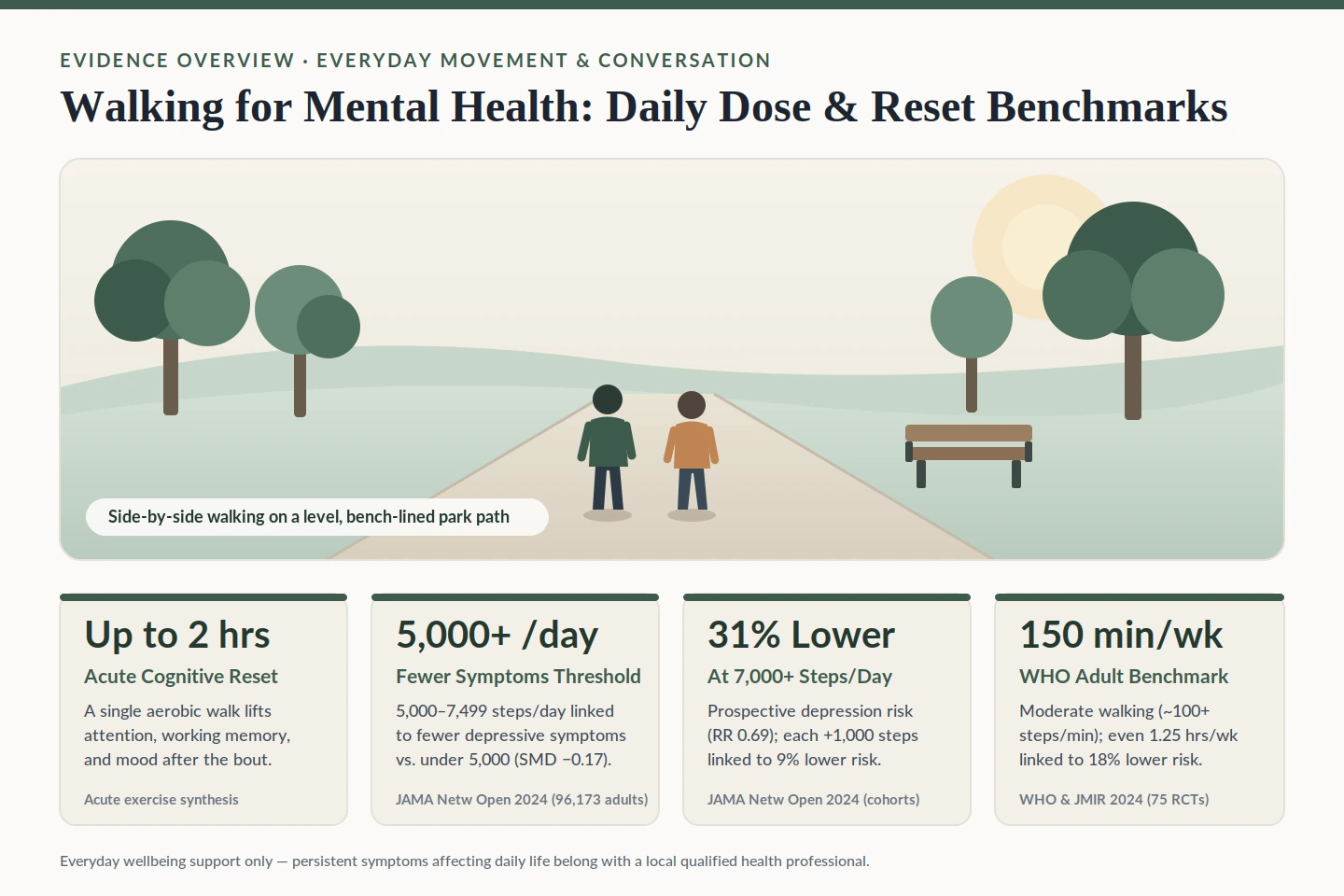
Regular walking supports mental health by lowering depressive and anxiety symptoms, easing acute stress reactivity, and refreshing focus for up to 2 hours after a single bout. Measurable mood benefits begin at modest daily step counts above 5,000 steps per day, while optional side-by-side peer walks reduce direct eye-contact pressure and make everyday conversations easier to open.
Across the Walking and Conversation collection, daily walking is treated as an accessible, non-clinical habit rather than a medical treatment or fitness test. Sustainable routines depend on starting at a comfortable, repeatable pace and protecting psychological comfort when inviting a friend or colleague along, rather than imposing punishing speed goals or turning a casual stroll into a personal interview.
What are the main walking for mental health benefits?
Walking delivers measurable mental and physical benefits across adult age groups, reducing symptoms of depression and anxiety while improving sleep, cognitive health, and overall well-being. Large meta-analyses of randomized trials and objectively tracked step counts show meaningful mood improvements starting well below intense athletic training volumes, both in adults experiencing low mood and in general community populations.
Evidence from randomized walking trials and WHO guidance
In its physical activity fact sheet, the World Health Organization (WHO) reports that regular physical activity in adults reduces symptoms of depression and anxiety, enhances brain health, improves sleep and cognitive health, and helps prevent cardiovascular diseases, cancer, and type-2 diabetes. WHO explicitly highlights walking, cycling, and wheeling as accessible ways to stay active at any skill level during leisure, transport, work, or daily chores.
Randomized clinical evidence confirms that walking itself drives consistent symptom reductions. A 2024 systematic review and meta-analysis in JMIR Public Health and Surveillance (Xu et al., 2024) pooled 75 randomized controlled trials involving 8,636 participants. Compared with inactive controls, walking significantly lowered depressive symptoms across 44 adult trials (standardized mean difference, or SMD, −0.591) and significantly lowered anxiety symptoms across 26 adult trials (SMD −0.446). Both adults with baseline depression (5 trials; SMD −1.863) and adults without baseline depression (39 trials; SMD −0.442) improved, and walking showed no statistically significant difference compared with active controls such as other moderate exercise, yoga, meditation, or psychological interventions for depressive symptoms (17 trials; SMD −0.126) or anxiety symptoms (14 trials; SMD −0.053).
Daily step count thresholds and dose benchmarks
Objectively measured step data clarifies how everyday walking adds up. A 2024 systematic review and meta-analysis in JAMA Network Open (Bizzozero-Peroni et al., 2024) synthesized 33 observational studies (27 cross-sectional and 6 longitudinal) covering 96,173 adults aged 18 years or older (mean study ages 18.6 to 91.2 years). Compared with taking fewer than 5,000 steps per day, accumulating 5,000 to 7,499 steps per day (SMD −0.17), 7,500 to 9,999 steps per day (SMD −0.27), and 10,000 or more steps per day (SMD −0.26) were all linked to fewer depressive symptoms, following a roughly linear trend up to 10,000 steps per day.
Across cross-sectional comparisons, daily counts of 7,500 or more steps per day were associated with fewer depressive symptoms (12 studies; SMD −0.30) and a 42% lower prevalence of depression (OR 0.58) than counts below 7,500 steps per day. In prospective cohort studies following adults over time, walking 7,000 or more steps per day corresponded to a 31% lower risk of developing depression (RR 0.69) compared with taking fewer than 7,000 steps per day, and each extra 1,000 steps per day was associated with a 9% lower risk (RR 0.91). Because those step-count studies are observational, reverse associations are possible and causal proof cannot be claimed from step counts alone, yet the directional pattern aligns closely with the randomized walking trials.
| Evidence Source | Walking Dose or Format | Measured Mental or Health Outcome | Practical Interpretation |
|---|---|---|---|
| Xu et al. (2024), 75 RCTs (8,636 participants) | Structured adult walking vs. inactive controls | Depressive symptoms SMD −0.591 (44 RCTs); anxiety symptoms SMD −0.446 (26 RCTs) | Walking reliably eases mood and anxiety symptoms across indoor, outdoor, solo, and group settings |
| Bizzozero-Peroni et al. (2024), 33 studies (96,173 adults) | 5,000 to 7,499 steps/day vs. fewer than 5,000 steps/day | Fewer depressive symptoms (SMD −0.17) | Modest daily walking above a sedentary baseline already aligns with better mood scores |
| Bizzozero-Peroni et al. (2024), prospective cohorts | 7,000+ steps/day and each +1,000 steps/day increment | 31% lower depression risk (RR 0.69); 9% lower risk per +1,000 steps/day (RR 0.91) | Incremental daily step gains matter without requiring extreme 10,000+ targets from day one |
| Xu et al. (2024), prospective cohort synthesis | 1.25 hours/week or 2.5 hours/week of brisk walking | 18% and 25% lower risk of depression, respectively | Even half of the WHO 150-minute weekly moderate benchmark carries meaningful protective value |
| Hanson and Jones (2015), 42 studies (1,843 participants) | Outdoor community walking groups (74,023 walking hours) | Depression score SMD −0.67 (−0.76 if depressed); systolic BP −3.72 mm Hg; 75% adherence | Group walking pairs mood and cardiovascular improvements with strong long-term participation |
How does walking relate to everyday stress and anxiety relief?
Walking eases everyday stress and anxiety by dampening biological stress reactivity in the nervous system, improving short-term mood chemistry, and interrupting rumination through rhythmic movement. Both randomized trials of structured walking and World Health Organization stress guidance confirm that regular daily walking reduces anxiety symptoms and helps adults manage difficult day-to-day tension.
Biological and psychological stress pathways
The WHO stress questions and answers guide defines stress as a natural state of worry or mental tension prompted by difficult situations, bringing signs such as anxiety, irritability, difficulty concentrating, headaches or body pains, upset stomach, trouble sleeping, and appetite changes. When everyday tension accumulates, consistent aerobic movement acts on both physiological and behavioral pathways.
As summarized in the neurobiological effects of physical exercise reference synthesis, aerobic exercise such as brisk walking promotes positive affect, inhibits negative affect, and decreases the biological response to acute psychological stress. Exercise increases brain-derived neurotrophic factor (BDNF), helping reverse stress-induced BDNF drops to buffer stress in both the short and long term. Moderate-intensity aerobic exercise also produces the largest increases in beta-endorphin synthesis compared with very high or very low intensities, supporting mood improvement for the remainder of the day. Bizzozero-Peroni et al. similarly note that biological pathways (inflammatory changes, mesolimbic activation, neuroplasticity, and hypothalamic-pituitary-adrenal axis regulation) work alongside psychosocial factors including self-efficacy, self-esteem, sleep quality, and social support.
Why guided rhythm and structure help anxious walkers
In the 2024 JMIR Public Health and Surveillance walking meta-analysis, walking significantly lowered anxiety across 26 randomized trials (SMD −0.446), and structure made a measurable difference. Interventions in which participants followed walking instructions, such as supervised sessions or simple warm-up and cooldown cues, reduced anxiety symptoms significantly more (SMD −0.691) than unstructured walking without instructions (SMD −0.273).
Location flexibility also lowers barriers for stressed or weather-bound walkers. Xu et al. confirmed that both outdoor walking and indoor walking effectively alleviated depressive and anxiety symptoms, meaning a quiet indoor hallway loop or shopping-arcade walk during heavy rain still delivers mental relief rather than breaking a weekly habit.
What role does regular daily walking play in mood and mental reset?
Regular daily walking provides both an immediate cognitive reset—sharpening attention, working memory, and problem solving for up to 2 hours after a single bout—and cumulative mood protection when repeated steadily over weeks. Consistency matters more than punishing speed: randomized trials with low dropout rates achieved nearly double the depressive symptom reduction of high-dropout programs.
Cadence, talk-test intensity, and realistic weekly math
Nearly one third (31%, or 1.8 billion) of adults worldwide do not meet the WHO guideline of at least 150 minutes of moderate-intensity physical activity per week, a gap projected to reach 35% by 2030, and insufficiently active adults face a 20% to 30% increased risk of death compared with sufficiently active adults. Yet WHO stresses a liberating rule for beginners: any amount of physical activity is better than none, all physical activity counts, and reducing sedentary time helps every age group.
Understanding step rhythm prevents the most common beginner failure mode: starting too hard and quitting after a week. In a British Journal of Sports Medicine cadence review of 38 studies (Tudor-Locke et al., 2018), researchers found that free-living adults spend an average of 13.5 hours per day below purposeful stepping cadences (under 60 steps per minute, with a mean daily cadence of 7.7 steps per minute), while healthy adults average peak 30-minute cadences above 70 steps per minute and peak 1-minute cadences above 100 steps per minute. The review defines continuous walking bands as slow walking (60 to 79 steps per minute), medium walking (80 to 99 steps per minute), brisk walking (100 to 119 steps per minute), and faster locomotion (120 or more steps per minute), establishing 100 or more steps per minute as a consistent heuristic threshold for moderate intensity (3 METs).
Notice how quickly realistic daily blocks accumulate without athletic strain:
- Consistency beats intensity: In Xu et al.’s meta-analysis, trials with a low dropout rate of 0% to 10% achieved a depressive symptom reduction of SMD −0.779, nearly double the SMD −0.399 seen in trials with dropout above 10%. Most walking interventions ran for 3 to 6 months (44 trials, or 59%), ranging overall from 10 days to 18 months.
- Short brisk routines count: Prospective cohort evidence cited by Xu et al. shows that accumulating just 1.25 hours of brisk walking per week is linked to an 18% lower risk of depression, rising to a 25% lower risk at 2.5 hours per week (matching WHO’s 150-minute weekly moderate-intensity benchmark).
- Daily 30-minute anchor: Human research summarized in the neurobiological exercise synthesis highlights consistent aerobic routines such as 30 minutes every day for long-term stress coping and cognitive control, while a single aerobic bout transiently boosts executive functions—attention, working memory, cognitive flexibility, and inhibitory control—for up to 2 hours afterward.
- Guided pace over wandering: Xu et al. found that moderate-intensity and guided-pace walking produced clear symptom gains, whereas unstructured self-selected strolling alone did not reach statistical significance across the smaller subset of trials. Picking a purposeful, rhythmic stride you can maintain comfortably beats aimless meandering or exhausting sprints.
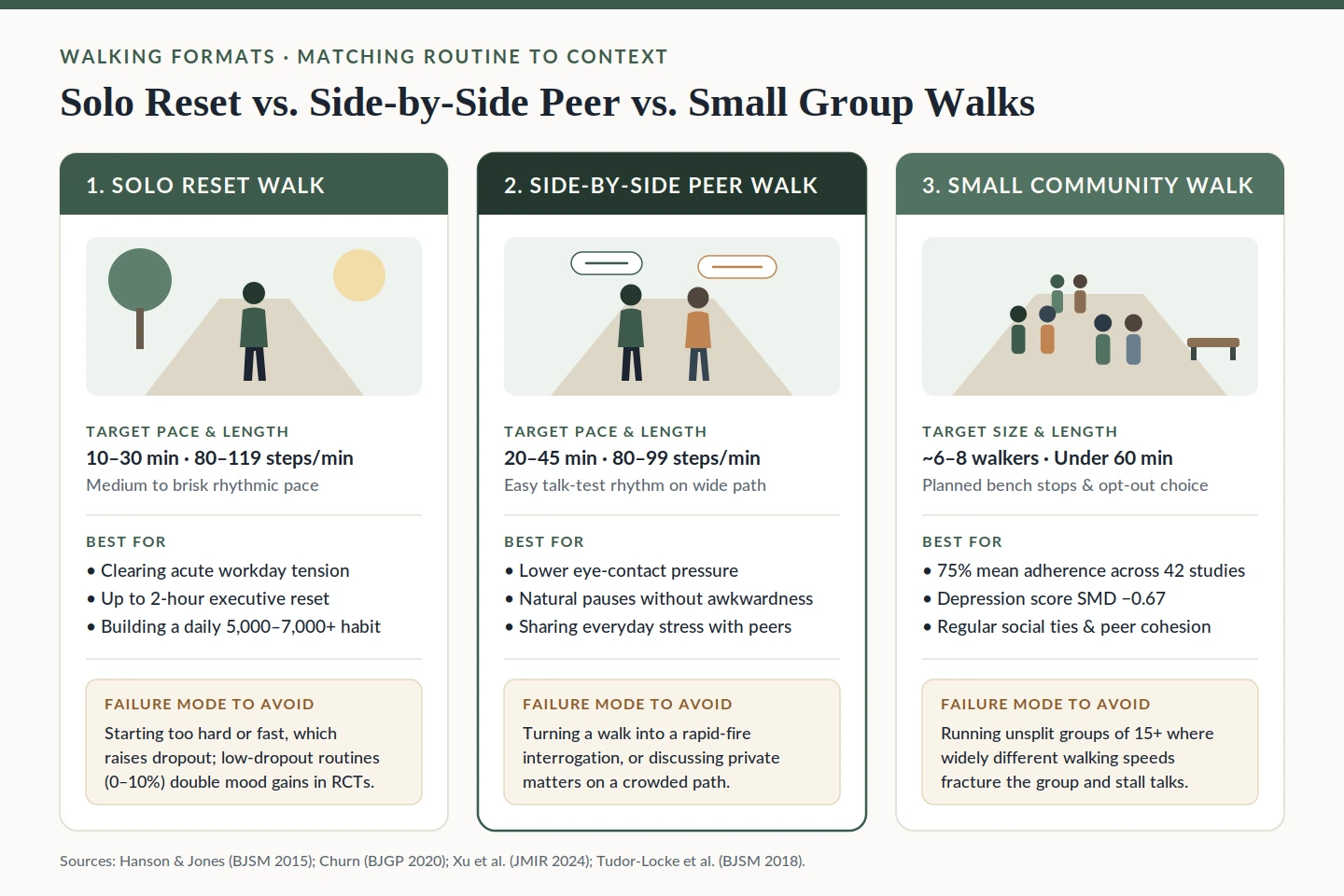
Comparing solo, peer, and small-group walking formats
| Walking Format | Cadence & Routine Anchor | Social & Conversational Dynamic | Primary Wellbeing Strength | Failure Mode to Avoid |
|---|---|---|---|---|
| Solo Reset Walk | Medium (80 to 99 steps/min) to brisk (100 to 119 steps/min); up to 30 minutes daily or split bouts | Uninterrupted quiet space for decompression and mental reset | Clears acute stress, lifts executive focus for up to 2 hours, and builds steady daily step counts | Setting exhausting early speed or distance targets that trigger soreness and high dropout |
| Side-by-Side Peer Walk | Comfortable medium cadence (80 to 99 steps/min) on a level, wide path | Shoulder-to-shoulder posture looking ahead; easy silences without intense eye contact | Lowers pressure when checking in on everyday stress with a trusted friend or colleague | Turning a casual walk into a rapid-fire interview or raising private matters on a crowded path |
| Small Community Group Walk | Short outdoor route under 1 hour with planned stops and pace choices | Informal small-group rhythm (around 7 walkers on average in primary-care lifestyle walks) | Delivers 75% mean adherence and protective community ties | Running unsplit groups of 15 or more walkers whose mixed abilities split the group and stall talk |
How do you talk to someone about their mental health during a walk?
To talk with someone about their mental health during a walk, make the invitation genuinely optional, walk side by side on an accessible quiet path, and ask open, unhurried questions rather than probing for clinical details. Side-by-side movement softens eye-contact intensity and allows natural quiet moments, while sensitive or confidential disclosures belong in a private indoor space.
Why side-by-side posture lowers conversation friction
In a primary-care outdoor walking report published in the British Journal of General Practice (Churn, 2020), a Scottish general practitioner led six monthly 2-mile lifestyle walks with five 15-minute discussion stops covering relaxation, eating, movement, sleep, and connection. The organizer specifically noted the comfort in discussing intimate, difficult issues while walking side by side within a small peer group. Keeping attendance informal and anonymous while explicitly emphasizing group confidentiality encouraged open sharing, and several participants went on to organize their own continuing weekly walking group.
The same report highlighted a key operational failure mode: across 6 walks and 43 attendees (an average of 7 per walk), the largest session of 15 walkers became difficult to manage because widely differing physical abilities split the pack into smaller disconnected subgroups. For detailed route width, slope, and seated stop measurements that keep side-by-side pairs comfortable, see how to organise an inclusive walk, and for managing multi-speed turn-back points, see walking pace groups and turn-back points.
Practical etiquette for peer and workplace walking conversations
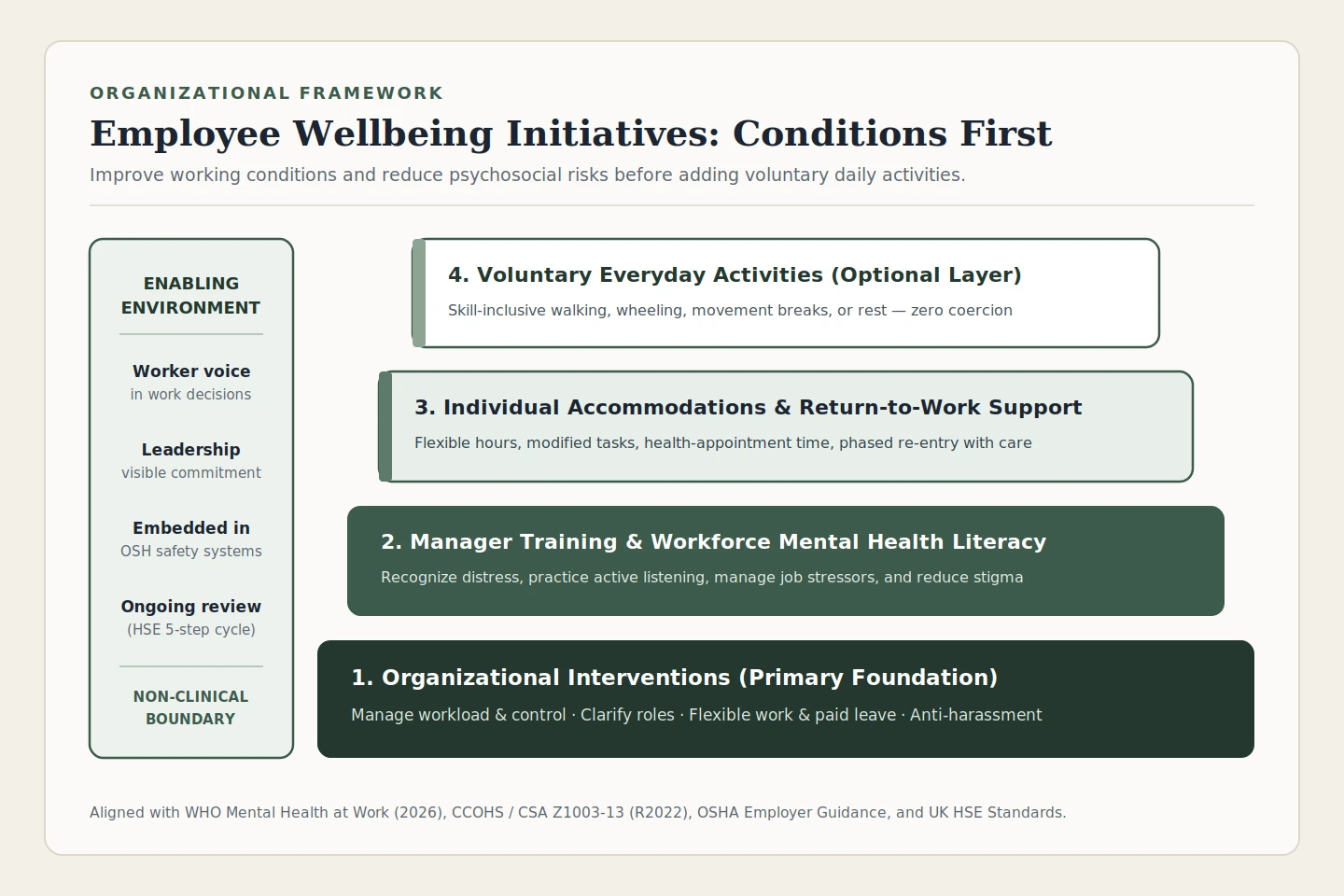
- Offer a no-pressure invitation with a seated option: Make clear that saying no, walking slowly, or stopping early at a bench is completely ordinary. In workplace settings, review limits of walking conversations at work so a walk never becomes an unspoken test or replaces reasonable adjustments.
- Let the other person set both pace and topic: Match your stride to the slower companion so nobody feels breathless while speaking, and open with everyday check-ins (“How has this week been feeling?”) rather than stacking follow-up questions like an interrogation.
- Use person-first, non-diagnostic language: Listen without guessing labels, offering unsolicited fixes, or minimizing what someone shares; practical wording patterns are covered in respectful language for mental health conversations.
- Protect public-space confidentiality: Busy park paths, narrow pavements, and open office courtyards carry voices easily. Agree on confidentiality upfront, and if a topic shifts toward private health, grief, or workplace conflict, suggest moving to a quiet indoor room.
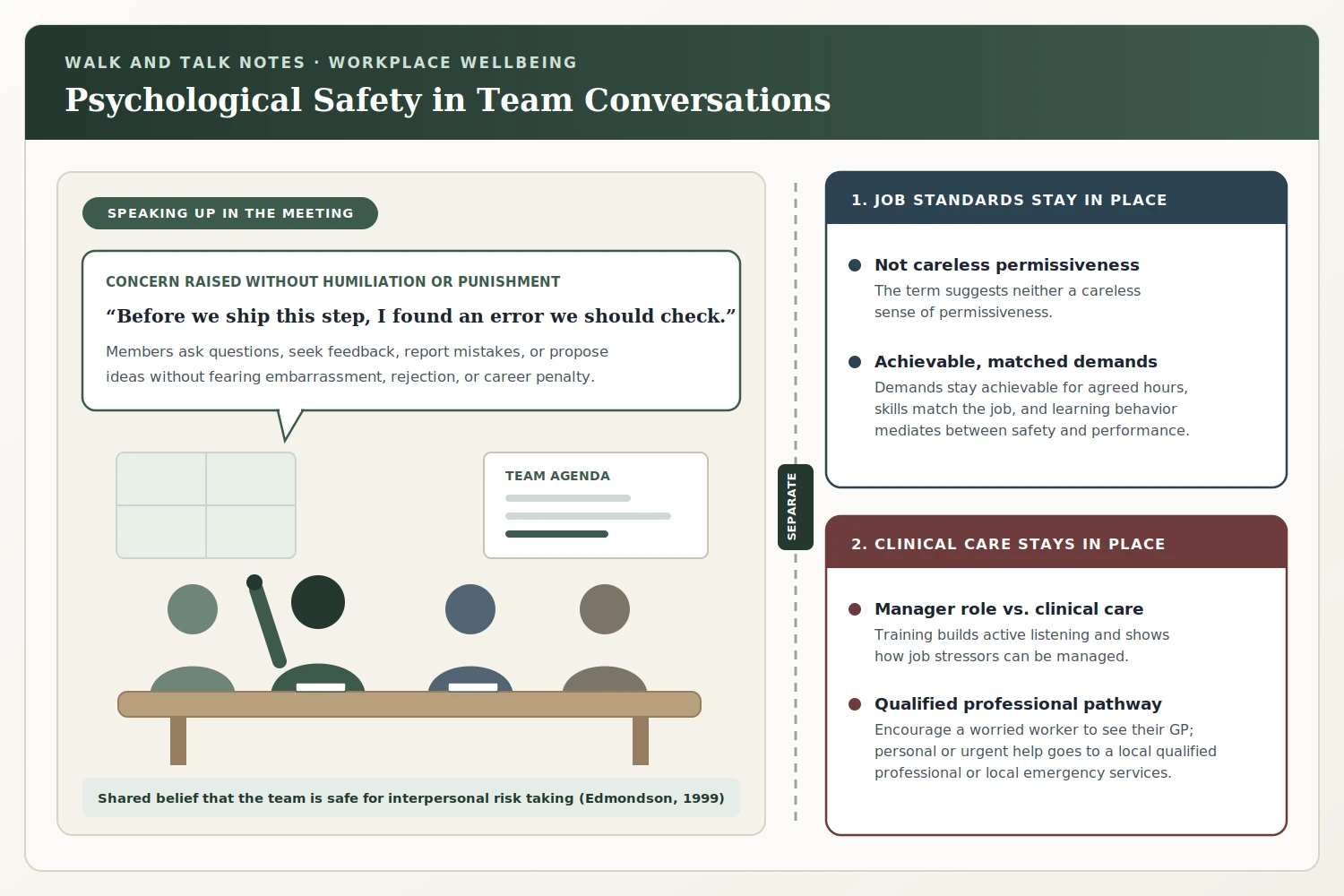
- Keep peer listening distinct from treatment: WHO advises that sharing concerns with trusted people lifts mood and eases stress, while difficulties that persist and impair daily functioning require support from a trusted health-care provider.
What are effective everyday stress management techniques alongside walking?
Effective everyday stress management pairs regular daily walking with a predictable schedule, consistent sleep hygiene, brief daily coping exercises, balanced meals, trusted social connection, and intentional limits on distressing news. Combining these low-barrier habits reinforces daily emotional steadiness far better than relying on sporadic intense workouts alone.
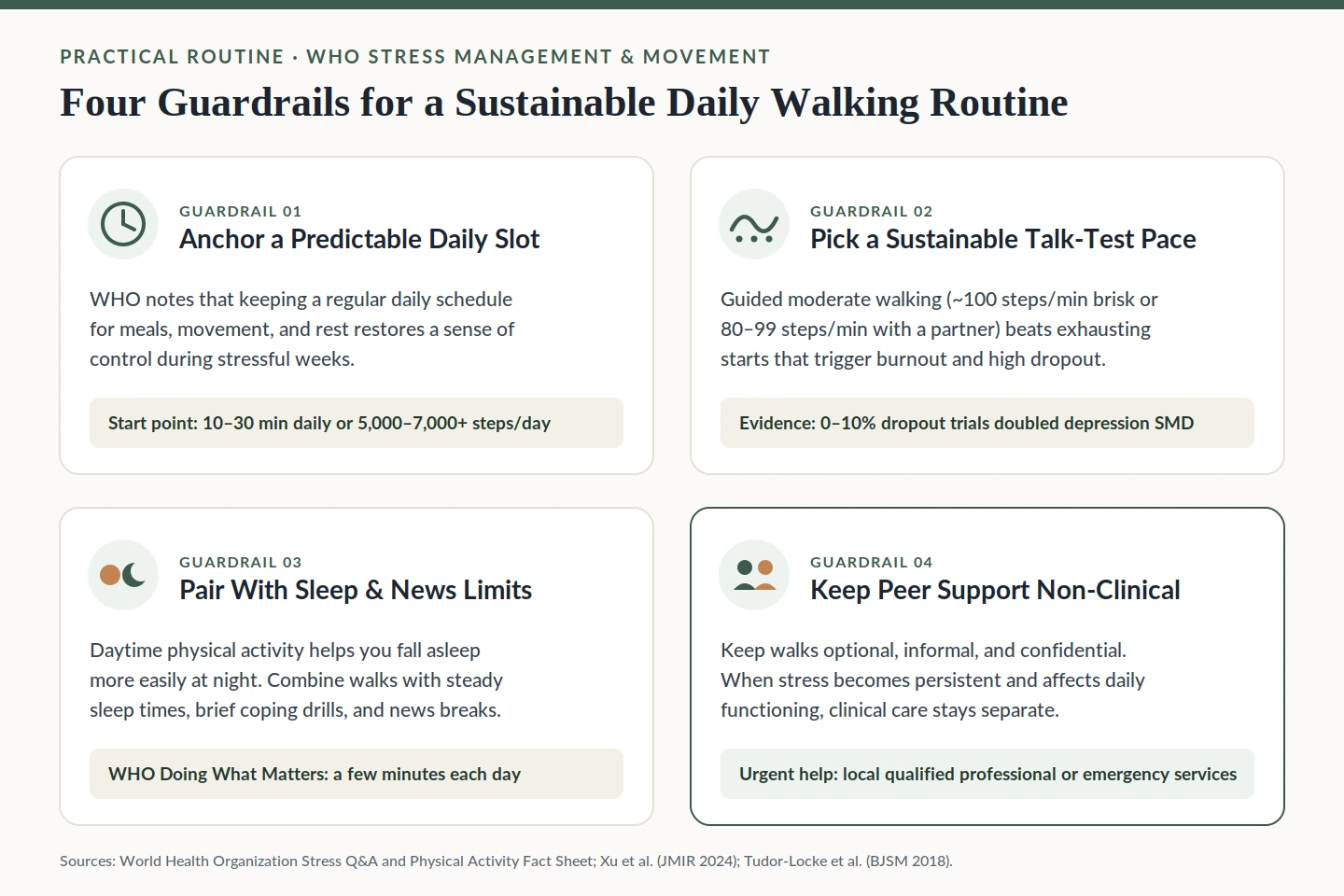
Pairing daily walks with WHO stress-management habits
The WHO stress guidance outlines seven practical habits that work directly alongside a daily walking routine:
- Practice brief daily stress skills: WHO’s illustrated guide Doing What Matters in Times of Stress teaches grounded self-help techniques that require only a few minutes each day.
- Keep a steady daily routine: Setting regular daily slots for meals, family time, walking or exercise, chores, and recreation helps restore a sense of control during demanding weeks.
- Protect sleep hygiene with daytime movement: WHO notes that being physically active during the day helps you fall asleep more easily at night. Reinforce daytime walks with consistent bed and wake times including on weekends, a quiet and dark sleeping space, fewer screens before sleep, and avoiding large meals, caffeine, or alcohol before bedtime.
- Connect with trusted people: Staying in touch with friends and family and sharing feelings with people you trust lifts mood and eases stress—making a regular peer walk a double habit of movement plus connection.
- Eat balanced meals at regular intervals: Eating a balanced diet with fresh fruits and vegetables and drinking enough fluids supports steady daily energy.
- Keep daily movement accessible: Regular daily exercise—including ordinary walking as well as more vigorous activity—directly lowers stress without requiring gym equipment.
- Limit distressing news and social media: WHO cautions that spending too much time following television and social media news can elevate stress; replacing a 15-minute evening news scroll with an unhurried walk reduces exposure while adding restorative movement.
Knowing when everyday habits are not enough
On its mental health fact sheet, WHO emphasizes that mental health exists on a complex continuum experienced differently by every person and shaped by individual, family, community, and structural factors. Daily walking and peer conversations support everyday resilience, but they are not diagnosis, therapy, or crisis care. When stress symptoms become persistent and begin affecting work, study, sleep, or everyday functioning, WHO notes that mental health conditions such as anxiety and depression require access to health care. For clinical assessment, treatment, or urgent help, contact a local qualified health professional or local emergency services.
How do awareness walks and community walking events support wellbeing?
Awareness walks and lay-led community walking groups support mental wellbeing by pairing accessible outdoor movement with social cohesion, companionship, and recurring neighborhood ties. Across 42 outdoor walking group studies, participants achieved 75% mean adherence, moderate reductions in depression scores, and broad cardiovascular gains with virtually no adverse effects.
Measured health and adherence outcomes of group walks
In a landmark British Journal of Sports Medicine systematic review and meta-analysis (Hanson and Jones, 2015) covering 42 outdoor walking group studies across 14 countries (1,843 participants and 74,023 participant walking hours), group walking delivered both psychological and physiological gains:
- Depression score reduction: Standardized mean difference of −0.67 across pooled studies, strengthening to a large effect size of −0.76 among participants defined as depressed at baseline.
- Cardiovascular and functional gains: Mean reductions of 3.72 mm Hg in systolic blood pressure, 3.14 mm Hg in diastolic blood pressure, 2.88 beats per minute in resting heart rate, and 1.31% in body fat, alongside increases of 2.66 mL/kg/min in aerobic capacity (VO2 max), 79.6 meters in 6-minute walk distance, and 6.02 points in SF-36 physical functioning.
- High adherence at modest doses: Mean adherence reached 75% across the 76% of studies reporting adherence, with virtually no adverse side effects—even though 75% of programs delivered volumes below international moderate-activity guidelines.
Community networks illustrate how low-barrier lay-led formats scale sustainably. Hanson and Jones highlight England’s Walking for Health scheme—launched in 2000 as short outdoor walks under an hour led by trained lay volunteers—which grew to 70,000 regular walkers, 10,000 volunteer walk leaders, and roughly 3,000 short weekly walks. WHO likewise identifies positive social interactions, safe neighbourhoods, and strong community ties as lifelong protective factors that build mental health resilience, while recommending local policies that expand access to walking and public open spaces.
If you are ready to organize a recurring local group rather than a solo or paired routine, step-by-step volunteer ratios, accessible route checks, and emergency card templates are covered in how to start a walking club. You can also browse all route, pace, and peer-walk notes on the Walking and Conversation topic hub.