
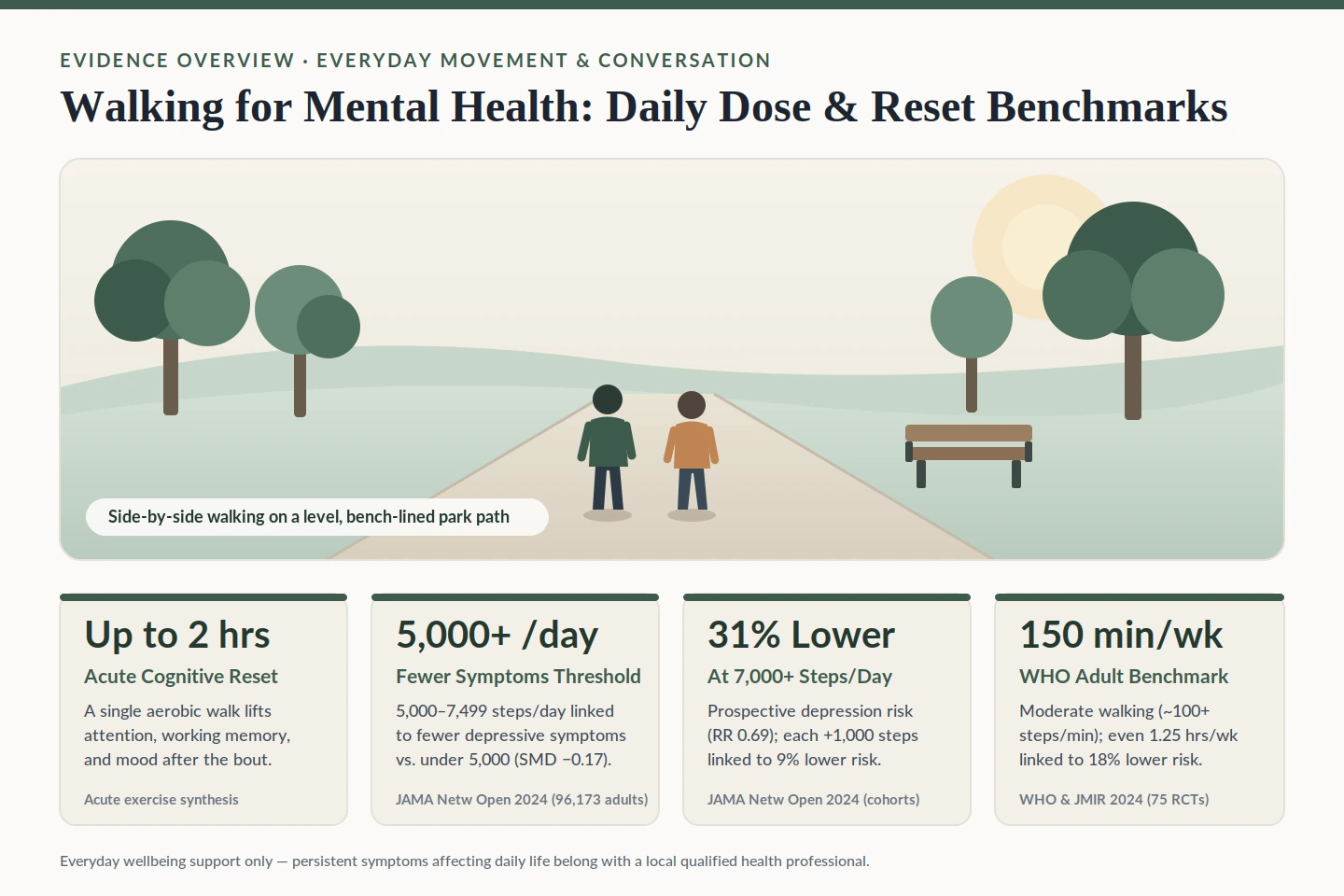
Walking for Mental Health: Daily Routine & Peer Walk Habits
Learn how regular walking supports mental health, starting at 5,000+ daily steps or short brisk bouts, and how side-by-side peer walks ease everyday conversations.
Five notes, one in each public topic. The history archive is not published.
Learn how regular walking supports mental health, starting at 5,000+ daily steps or short brisk bouts, and how side-by-side peer walks ease everyday conversations.
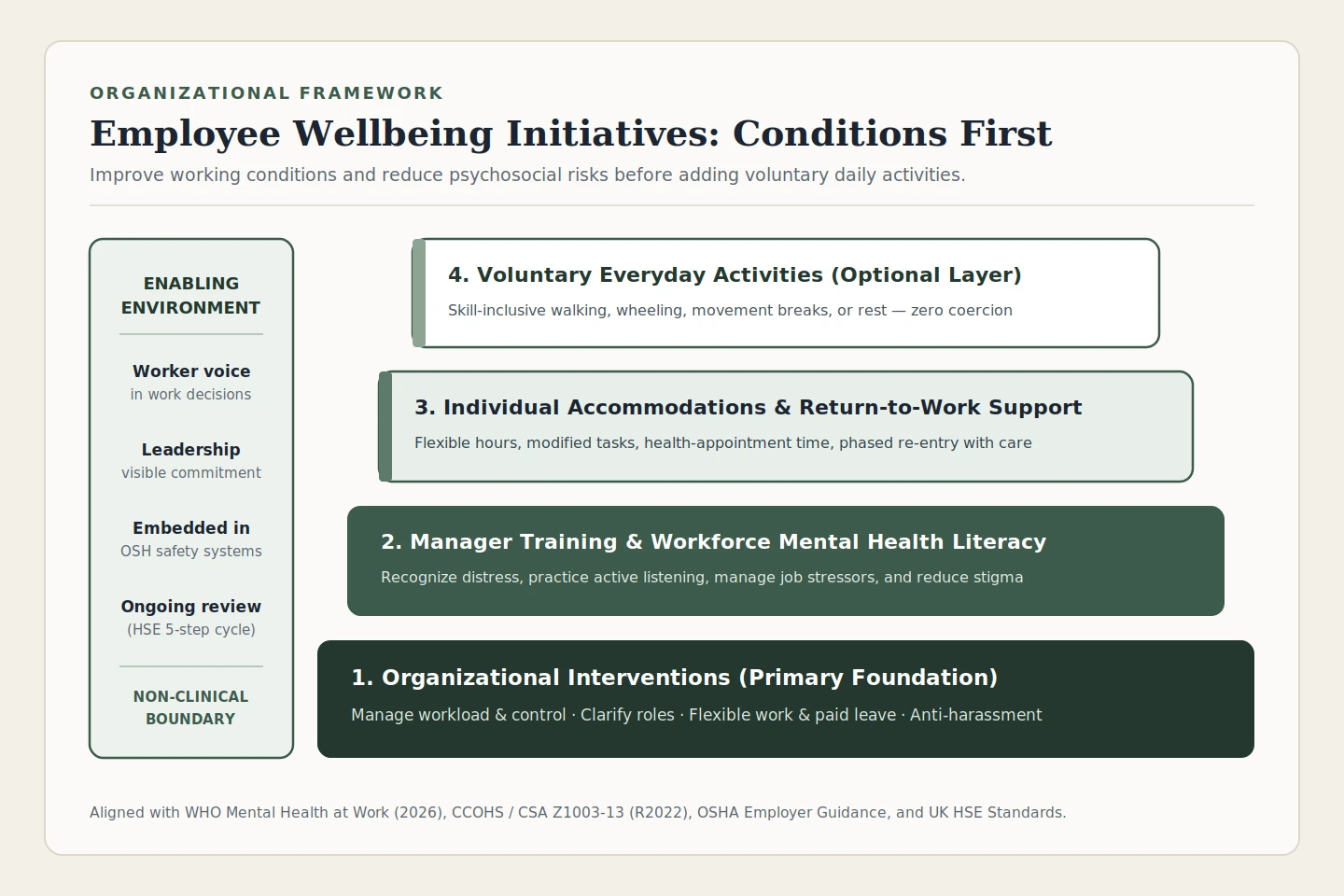
Employee wellbeing initiatives work best when teams improve working conditions and psychosocial risks first, then add voluntary, non-clinical everyday activities.
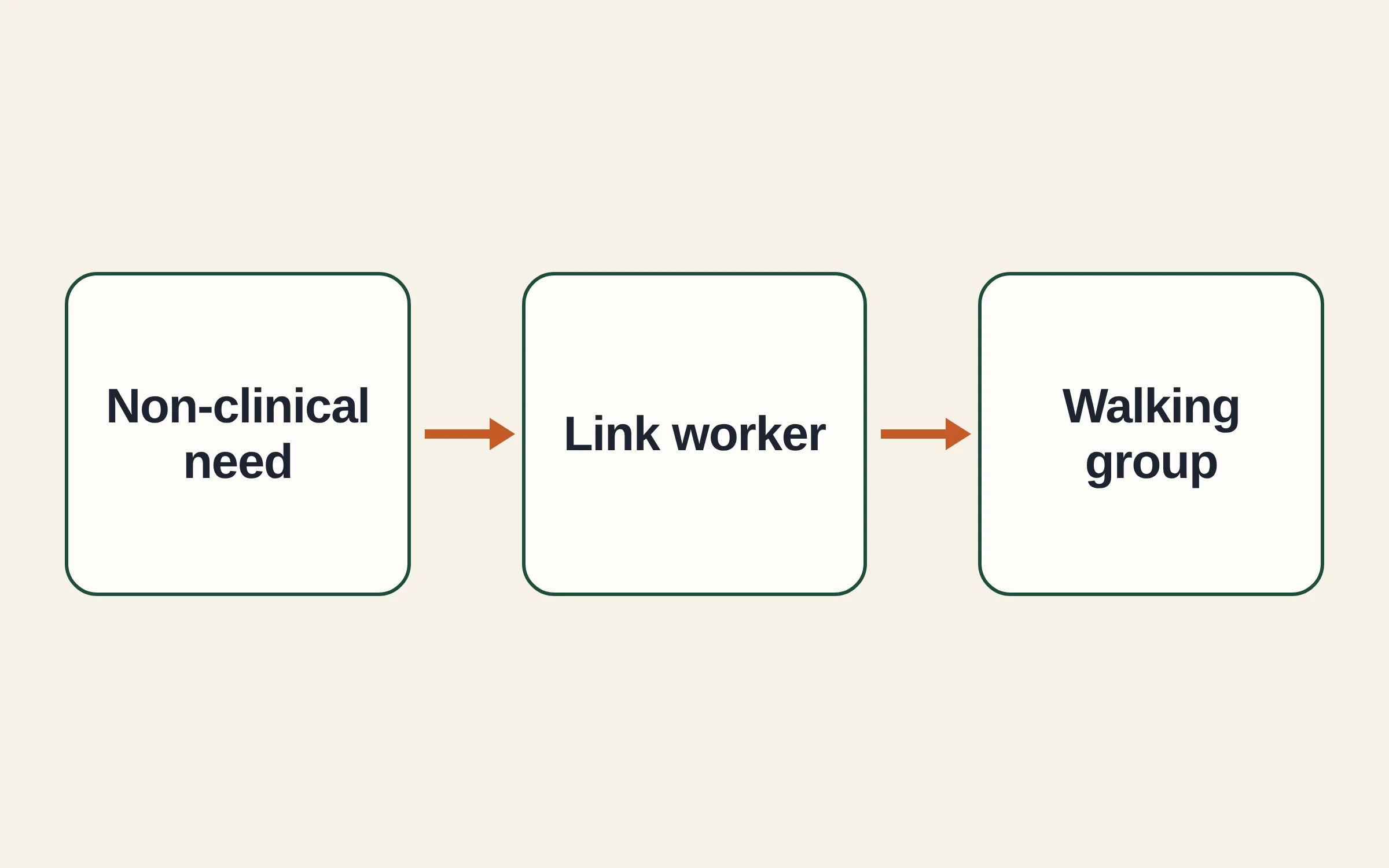
Social prescribing connects a person, through a link worker, to a non-clinical activity such as a walking group, and it does not replace clinical care.
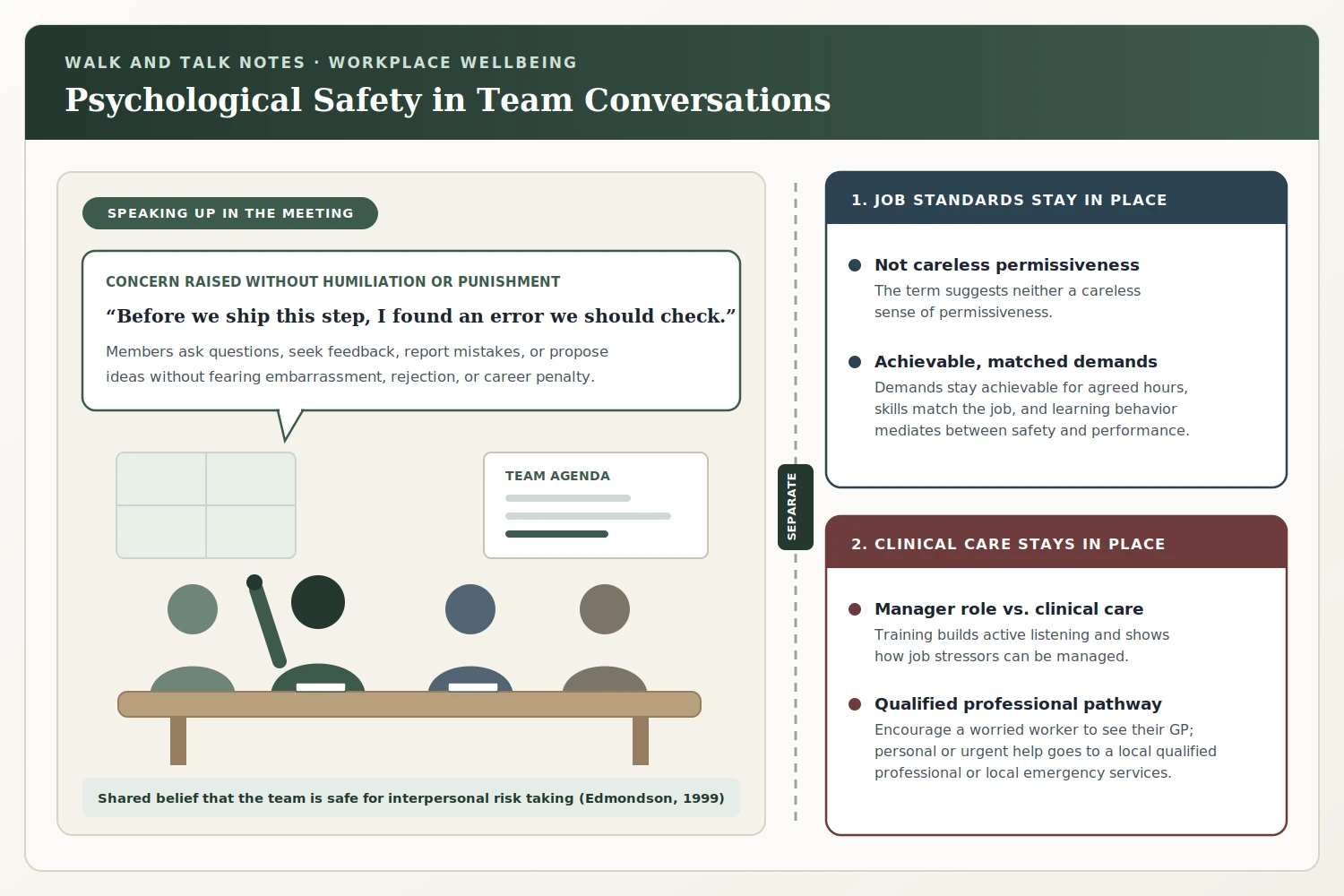
Psychological safety at work means speaking up with questions, concerns, or mistakes without humiliation, while keeping job standards and clinical boundaries.

Record accessible walking route width, pinch points, passing spaces, cross slopes and doorway thresholds on an ADA walk route before publishing event notes.

Structure a community services database with open-standard fields for eligibility, operating hours, referral scope, and scheduled re-verification dates.
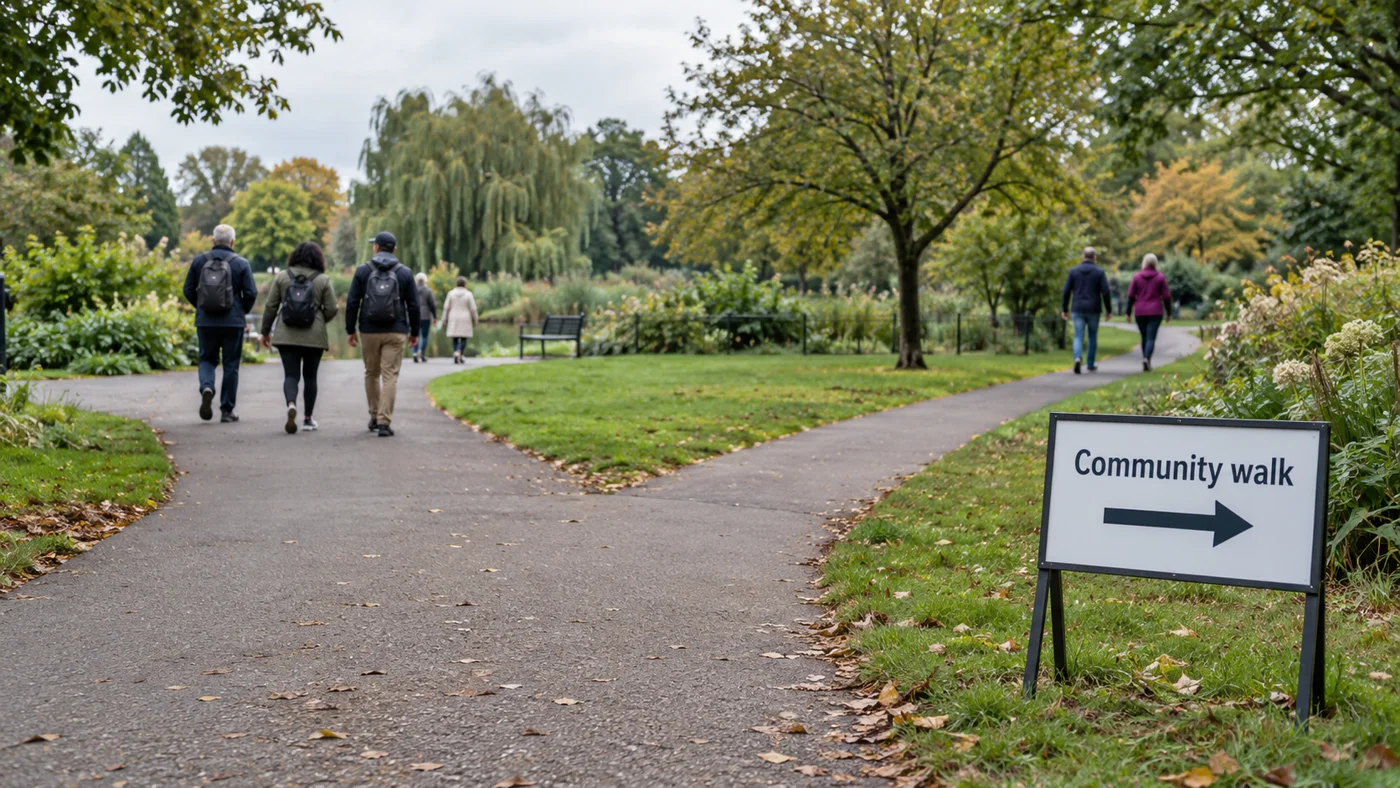
Plan temporary event wayfinding: choose decision points, review walking route signage, and prepare a sign record for placement, checks and removal.
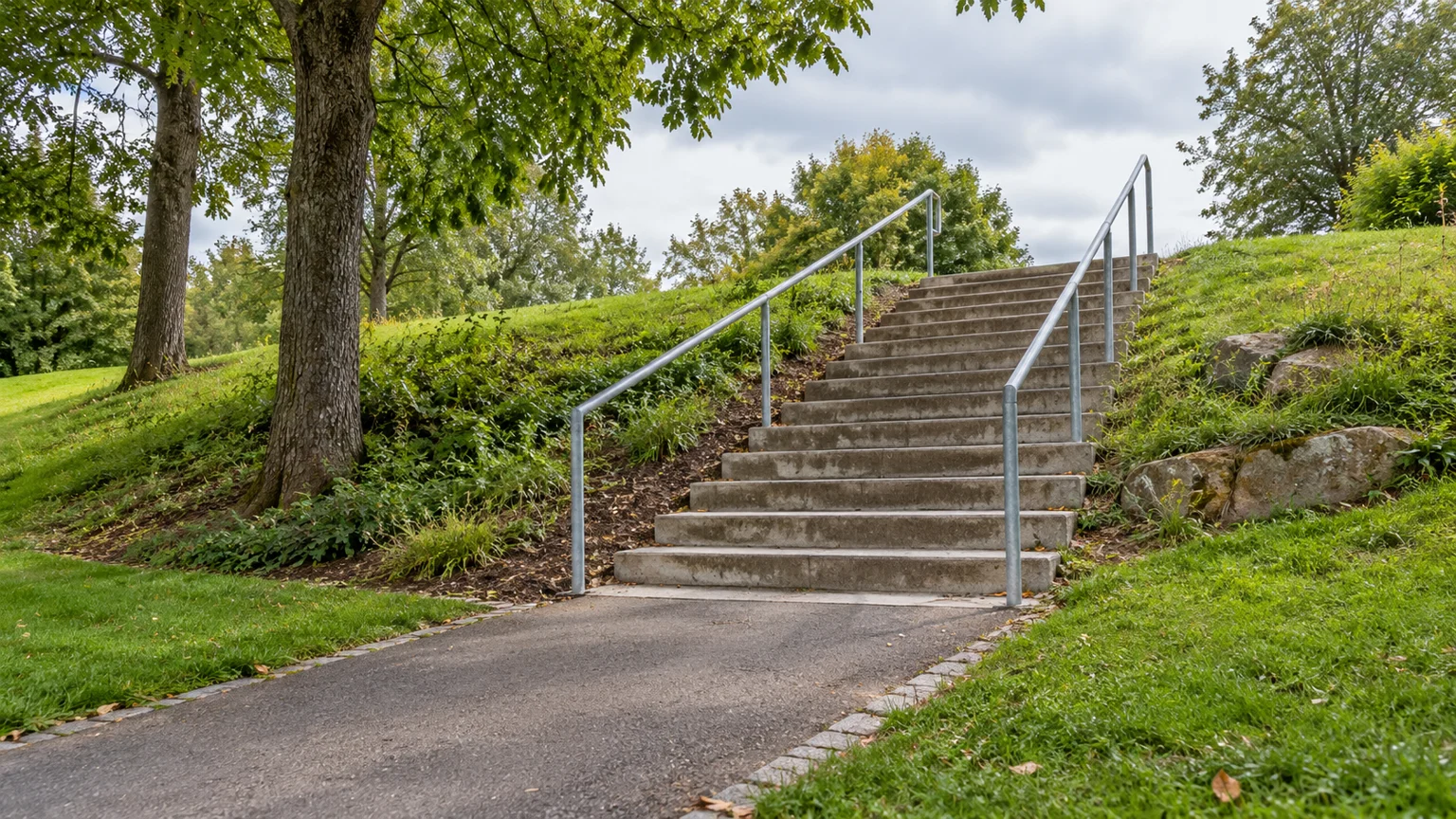
Check outdoor stairs before announcing a community walk: record flights, landings, handrails and the step-free bypass with this field worksheet.
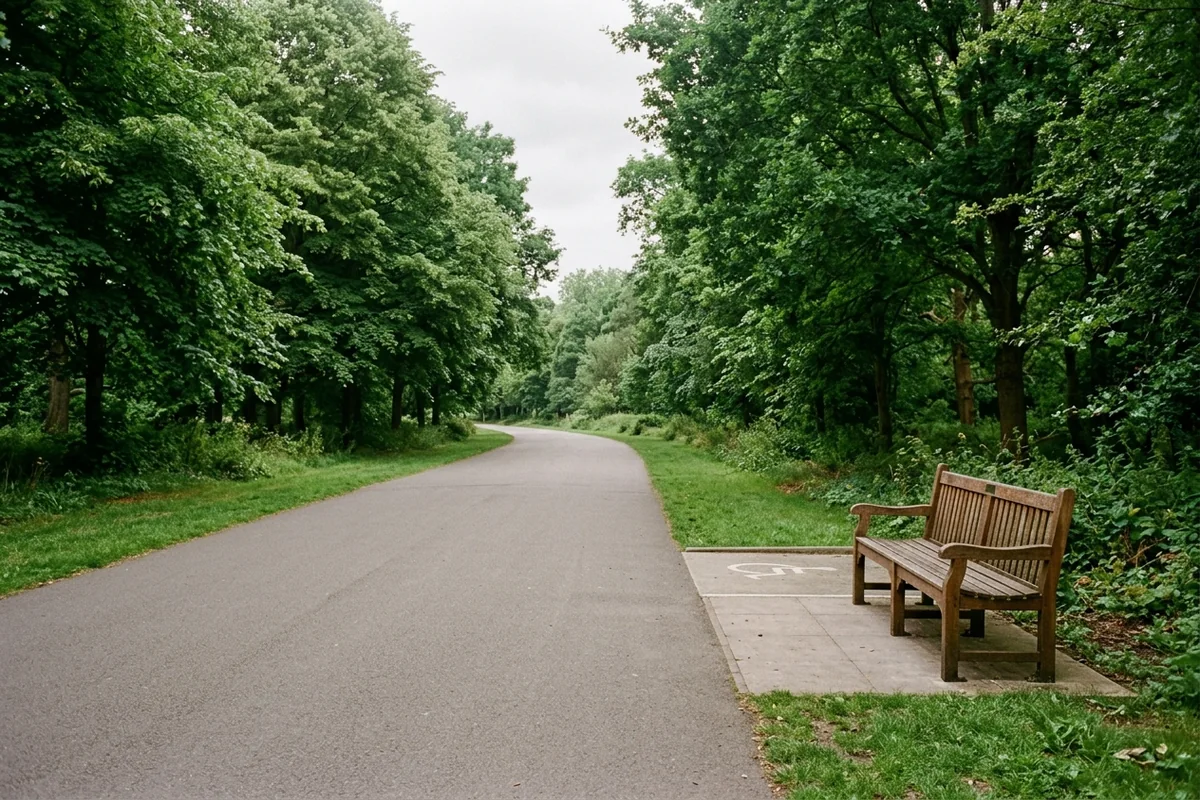
Plan conversational walking pace groups with UK DfT 1.5–2.0 m side-by-side path widths, 21-minute time-based turn-back benches, and sweep leader route cards.
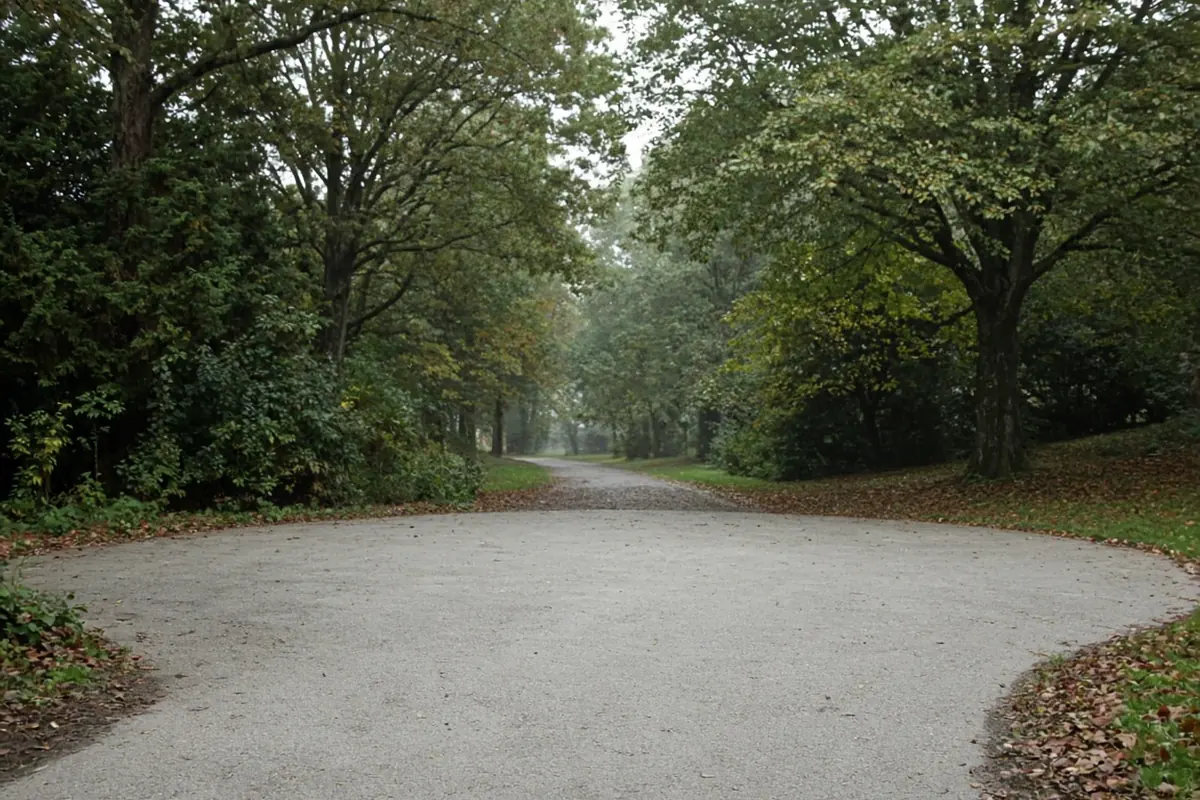
Field-reconnaissance accessibility audit checklist for outdoor events and routes covering PROWAG R302/R304 slopes, ASTM F1951 surface firmness, ADA toilets, and PAS 6463 quiet tents.

Operational guide to designing an inclusive corporate wellness challenge using capped active-day streaks, personal baseline gain indexing, and 2024 Compendium activity conversions.

Operational guide to mental health first aid at work: non-clinical ALGEE boundaries, crisis escalation triggers, GDPR/ADA data firewalls, and 4-tier referral directories.

Operational guide to low-barrier workplace wellness ideas across office, remote, shift, and mobility-diverse teams using NIOSH Total Worker Health and ISO 45003 controls.

Operational guide on how to start a walking club: PROWAG R302 step-free route checks, 300–500 m bench spacing, 3-tier MET pace cohorts, volunteer back-marker ratios, and pocket ICE cards.

Tick through route, hearing, vision, plain language, and rest before a community event. Each item can be checked on the page.

Record who a local service is, where it applies, and the date you checked. Drop entries you cannot recheck. Do not copy unverified numbers.
Plan a walk people can join, pause, and leave: route width, slope, passing space, and stops from public accessibility guidance.

Use the broader term when you are not naming a diagnosis, describe the person first, and do not guess what someone needs.
A walking conversation at work is optional and confidential.