A walk that only works for people who can keep a fast pace on uneven ground fails the people who need to pause or use a wheelchair. Plan one continuous route that is firm, wide enough to pass, and broken by real places to stop.
This note is for people organising a conversation walk or a small outdoor gathering. It is not a fitness plan, and it does not say that walking treats any health condition. The figures below come from public accessibility guidance for routes and temporary events, read on 15 October 2026. Local building rules can be stricter. Measure the path you will actually use.
Use one route that other participants use, at least 36 inches wide, with a passing space at least every 200 feet, and a slope no steeper than 1:20 unless you install a proper ramp. If the route gets steeper than 5 percent, the U.S. Access Board says that portion has to be treated as a ramp.
What to check on the route
The ADA National Network’s 2015 planning guide for temporary events says an accessible pedestrian route should be the same route other participants use when that is possible. It should be at least 36 inches wide, narrowing to 32 inches only for a short stretch of no more than 24 inches, such as a doorway. It asks for a 60-by-60-inch clear space at least every 200 feet so two people using wheelchairs can pass, and at least 80 inches of headroom.
| Route feature | Figure in the guidance | Why it matters on a walk |
|---|---|---|
| Clear width | 36 inches minimum; 32 inches only for up to 24 inches | A person using a wheelchair or walking aid can stay on the same path |
| Passing space | 60 by 60 inches at least every 200 feet | Two people can pass without leaving the route |
| Running slope | No more than 1:20, unless a ramp is installed; steeper than 5 percent is treated as a ramp | A “gentle hill” can be a ramp in the standards |
| Ramp slope | Limited to 1:12, with handrails and edge protection when a ramp is required | A steeper shortcut is not an accessible route |
| Cross slope | Limited to 1:48 | A path that tips sideways is hard to travel |
| Surface | Stable, firm, and slip resistant; vertical changes over 1/4 inch need a bevel, and over 1/2 inch need a ramp, lift, or elevator | Gravel, soft grass, and a single step break the route |
The Access Board’s guide to floor and ground surfaces says an accessible surface must be stable, firm, and slip resistant. Stable means it resists movement. Firm means it resists deformation under load. Openings such as grates are limited so a 1/2-inch sphere cannot pass. The event guide adds that the route should be smooth but not slippery, and free of stairs unless a ramp, lift, or elevator is also there.
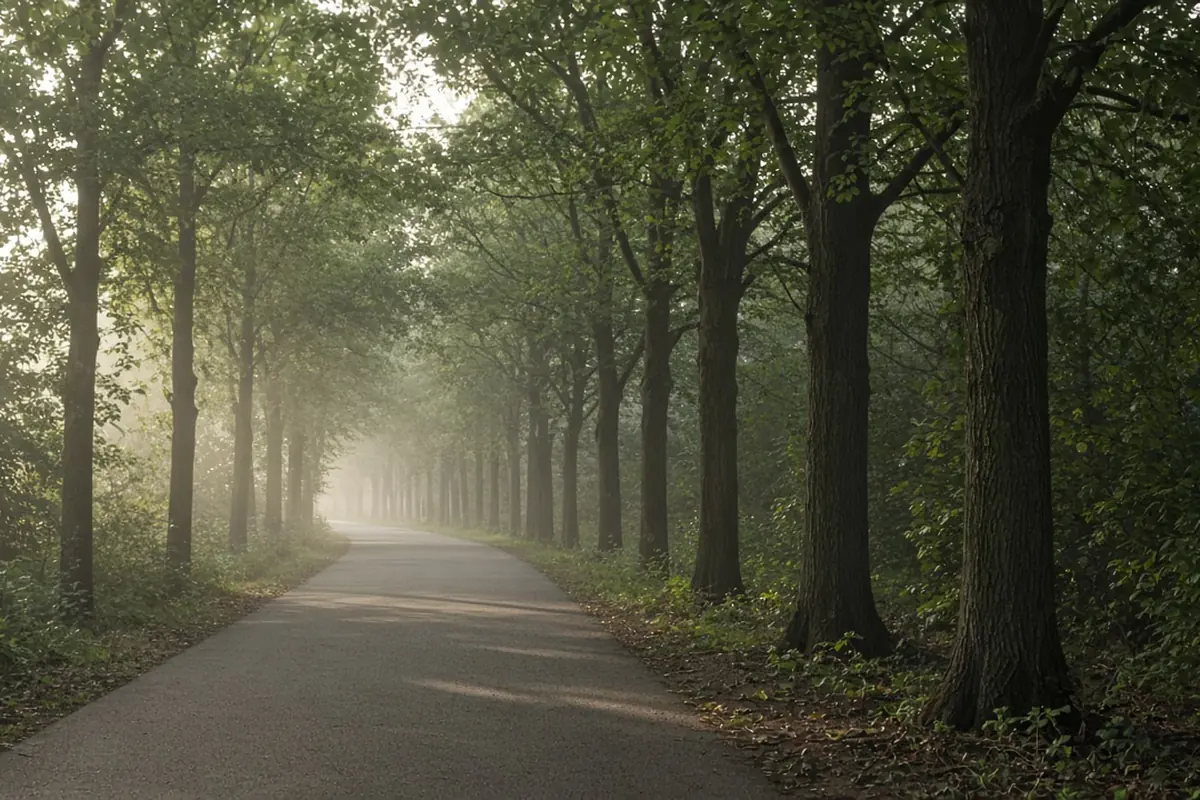
Walk the route with a tape before you publish a map. If a section is loose gravel, soft grass, or a step higher than half an inch, it is not the accessible route until you change it. Do not describe a parallel “optional” path through the grass as access.
Where people pause
A conversation walk fails if the only way to take part is to keep moving. The event guide says that when an outdoor event is in extreme temperatures — above 80 degrees Fahrenheit or below 50 — organisers should arrange access to more moderate space, and that a large outdoor event should have at least one accessible outdoor shelter in each major activity area if nearby buildings are not available. Shelters should sit on level ground next to the accessible route.
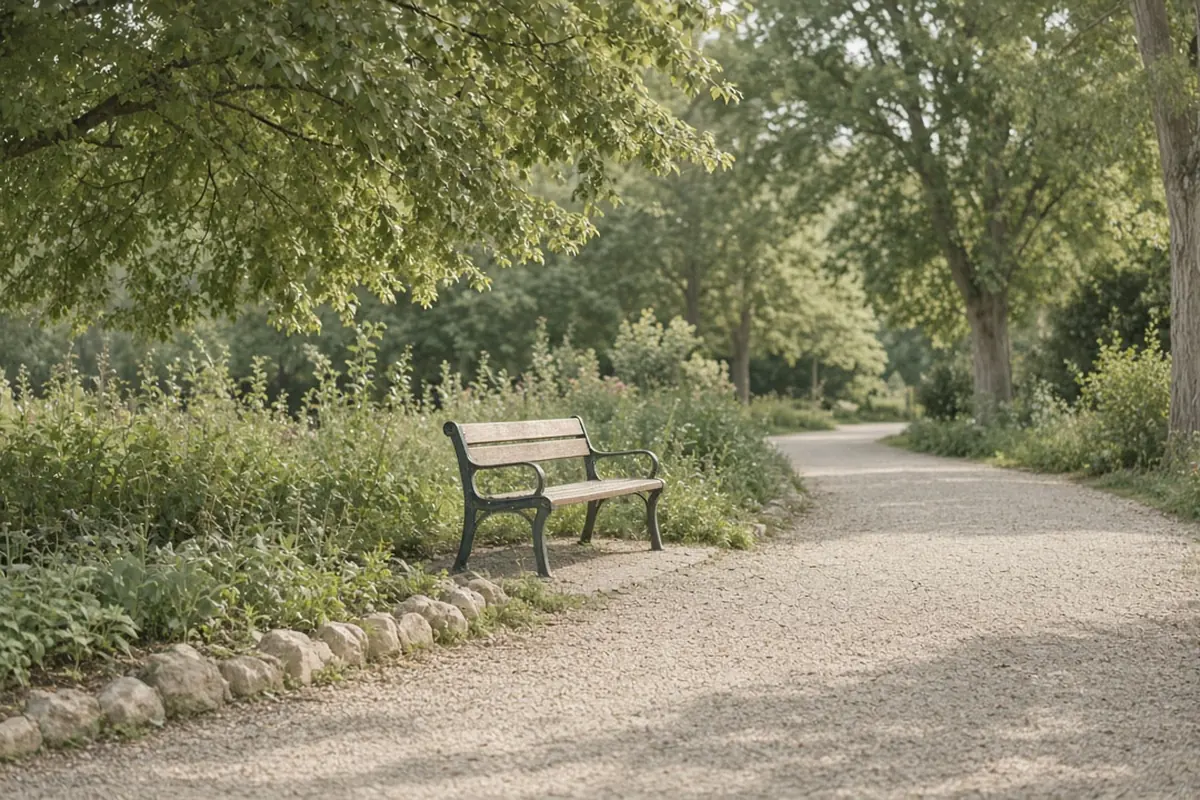
Put the stop on the route, not across a verge. Leave the passing space clear. Tell people at the start that leaving early is an ordinary choice, not something they have to explain. The same guide says staff should treat a person in terms of the whole person, avoid being overly protective, and let people say what they need.
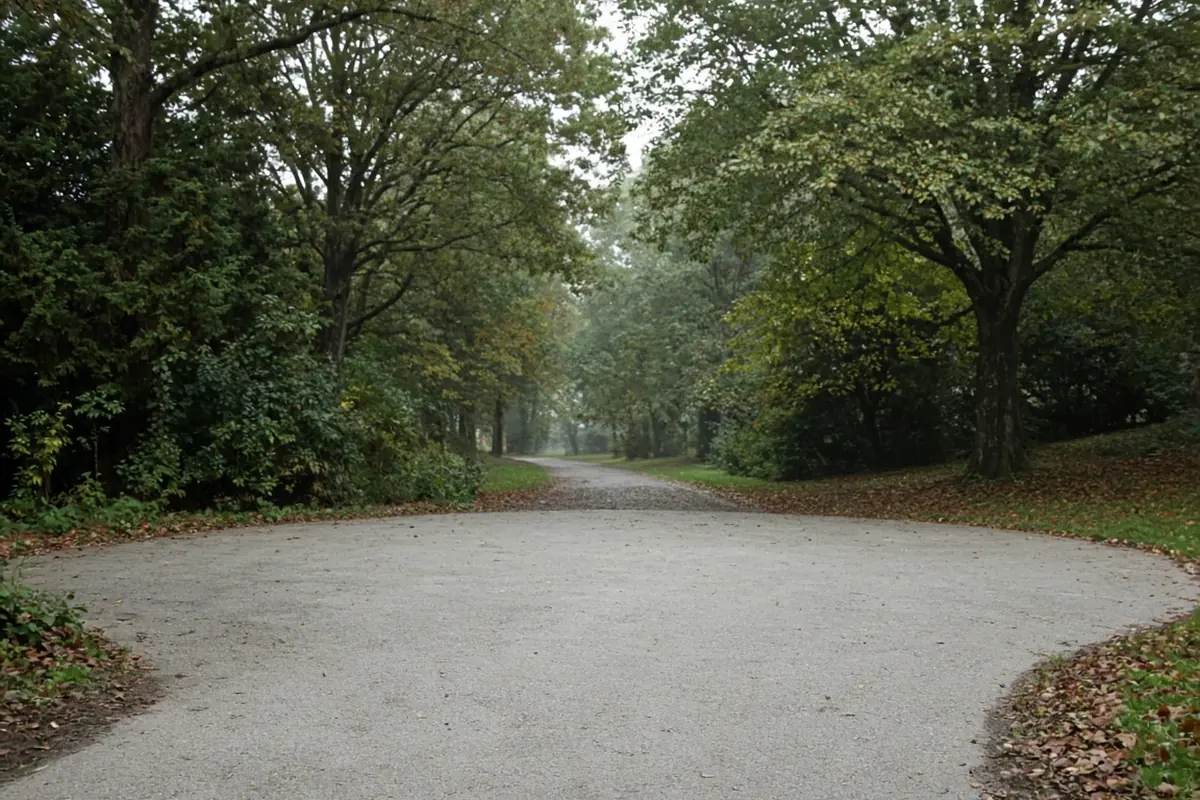
What this does not cover
These figures are for a pedestrian route at a gathering. They are not a promise that every park path already meets them, and they are not medical advice about who should walk. A person may need a shorter distance, a seated conversation, or not to come. Offer that choice in the invitation. Words for the invitation are in respectful language for mental health conversations. A fuller tick list for a room-based gathering is the accessibility checklist for a community event. More notes in this topic are on Walking and Conversation.